Hoar Construction operates 13 offices across three regions and is a leading national and local provider of construction management, general contracting, preconstruction, and design/build services. Several of its offices have grown quickly due to construction demand in local markets.
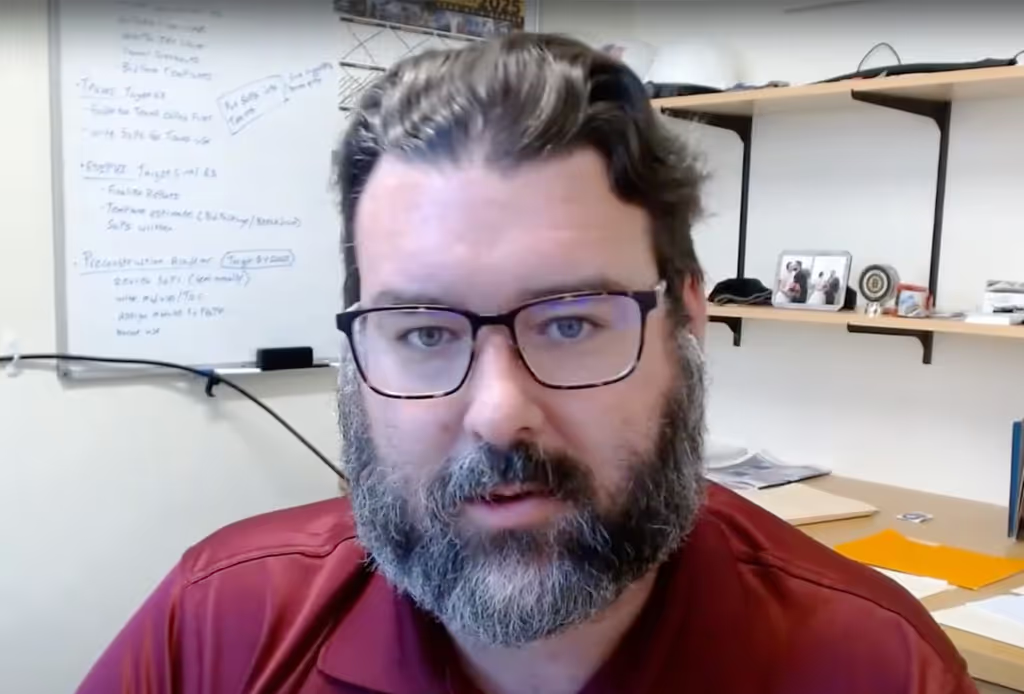
James Goree sits at the center of how that operation estimates. As Preconstruction Technology Manager, he owns the tools Hoar's preconstruction teams use every day, and he's the one who trains new teams and new hires on them.
For the last few years, James has also been running a deliberate, multi-year software evaluation. It started with a short, candid diagnosis of the tools Hoar already had.
Taking turns in the estimate
At Hoar Construction, preconstruction is a team sport. Pursuits get divided by trade across several preconstruction managers, and increasingly across offices.
"It's kind of rare these days that you just have one person working on a project unless it's something small,” says James, “We normally are going to split up the work across several people on a team. We're also getting regional teams these days where they may be sharing resources in different offices."
Hoar's legacy estimating software wasn't built for that level of collaboration. Real-time collaboration was technically available, but turning it on disabled other features and made the team nervous. So, the team fell back on what they knew: taking turns in an estimate.
"Historically it's been challenging. Who is in the estimate? Why is it locked? Being able to be in the tool at the same time, get your work done faster, not have to worry about reserving time to work around other people's schedules…that should be a thing of the past." — James Goree, Preconstruction Technology Manager at Hoar Construction
Collaboration wasn't the only drag. Estimating, unit pricing history, and cost modeling lived in different places, and every handoff between systems cost time. James calls it app fatigue.
"Having to have people learn different systems and be able to push information from one system to another has been a challenge over the years."
The bigger cost was consistency. With no enforced standard, every preconstruction manager could structure an estimate their own way. That made it hard to compare one job to the next, and harder to turn finished work into benchmarks for the next pursuit. James describes it as "the Wild West, where anybody could do anything they wanted to with an estimate."
A feature list, and three years of watching
Hoar first looked at Ediphi about three years ago, when the company was just forming.
James already knew the team behind it. Hoar had used BuildingConnected almost from the start, and that history set his expectations.
"Anything Dustin is involved with is always very intuitive. A lot more user-friendly than things we've used in the past.”
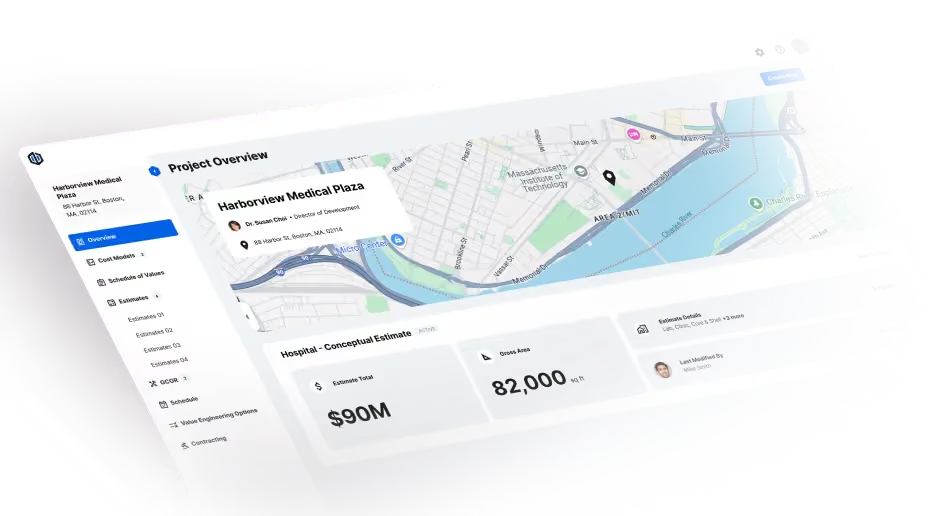
An intuitive platform wasn't enough on its own, though. Hoar needed a single platform that could replace the patchwork: detailed estimating, unit-level pricing history, and cost modeling that draws on that history.
So Hoar started small: five licenses for a pilot, and a written list of what it would take to go further.
Much of that list was delivered. Along the way, James noticed something he hadn't gotten from other vendors: his requests were being heard.
"It's been very refreshing to have a product that gets attention, and people that listen to our requests. We have a lot that don't." — James Goree, Preconstruction Technology Manager at Hoar Construction
Proving it in the Austin office
Five licenses in Hoar’s Austin office became the testing ground, running Ediphi on a large number of mixed-use projects.
The Austin team works in a way that made Hoar's old tools difficult. A preconstruction team of five or six splitting every pursuit. One person leads, and the others own specific trades.
"They have a team of probably five, six people, and they're always splitting up the work. That also helps you maintain some expert nature in the trades you typically handle, and also helps with knowing the subcontractor community better."
With everyone working on the same estimate at once, that division of labor stops being a scheduling problem.
“Ediphi has fundamentally changed how our team builds and manages estimates." — Adam Stallman, Director of Preconstruction in Hoar’s Austin office.
“The ability to link quantities and costs to project metrics through dynamic formulas allows us to make significant changes in a fraction of the time it used to take. Combined with the intuitive interface and real-time collaboration, the efficiencies have been tremendous. Even our most hesitant preconstruction team members were sold after their first project. The software really speaks for itself," says Adam.
Earning buy-in one office at a time
Once the platform had proof, the rollout followed the same deliberate pattern.
On October 1, Hoar moved to 30 users across four to five offices. From there, the rollout runs region by region, starting with:
- Texas, by the end of 2026: the rest of Hoar’s Texas offices join Austin, with Orlando coming along early because of strong interest.
- Early 2027: Tennessee and the DC area, adding four more offices.
- Spring 2027: Hoar’s corporate office, including its healthcare and Alabama divisions.
The Ediphi team is supporting the rollout with three on-site training events, starting in Houston, on top of the virtual sessions it has run over the past few months. After that, James expects to handle training for smaller groups and new hires himself, as he has with every estimating system before.
"You guys have been great to work with, and very helpful on the support side getting us up and running to this point." — James Goree, Preconstruction Technology Manager at Hoar Construction
The goal is to be off its legacy estimating system within a year.
From the “Wild West” to one standardized platform
The big payoff for Hoar is consistency across all 13 offices.
Ediphi's administrative controls let Hoar enforce company standards, like the work breakdowns and sort fields every estimate should follow. When every estimate is built the same way, finished work becomes usable data.
"That helps a lot with consistency and making sure we can get information benchmarked for cost modeling at a more rapid pace."
Hoar is candid that it's still early in building out that benchmarking. But James is clear about the starting point it replaces.
"It certainly should be a lot easier than going from the Wild West, where anybody could do anything they wanted to with an estimate, and trying to put that in a uniform format." — James Goree, Preconstruction Technology Manager at Hoar Construction
Ediphi is also changing how Hoar can respond in one of its key markets. Developer-led work lives or dies on the owner's pro forma, and that means fast answers to "what if" questions.
"A lot of developer-led work is very dependent on meeting their pro forma. Ediphi gives us much better opportunity to make high-level, parametric-type changes to quickly adjust an estimate and see what the outcome is on cost for the owner. Much more rapid iterations than we could do historically."
Hoar also wants the history behind those iterations: the ratios, like net-to-gross and skin-to-floor area, that tell a preconstruction professional whether a design is on track.
What's next
Hoar's list keeps growing, and so does the platform.
James is watching self-perform assemblies, invitation to bid and bid leveling, and contracting and purchasing, all areas where Ediphi is actively building.
That's the part of the relationship that made switching worth it. Hoar told Ediphi what it needed, and Ediphi built it. Now Hoar is rolling it out across 13 offices, region by region, with a clear goal: one place where every Hoar precon team build the estimate together, and where every finished job makes the next one sharper.