


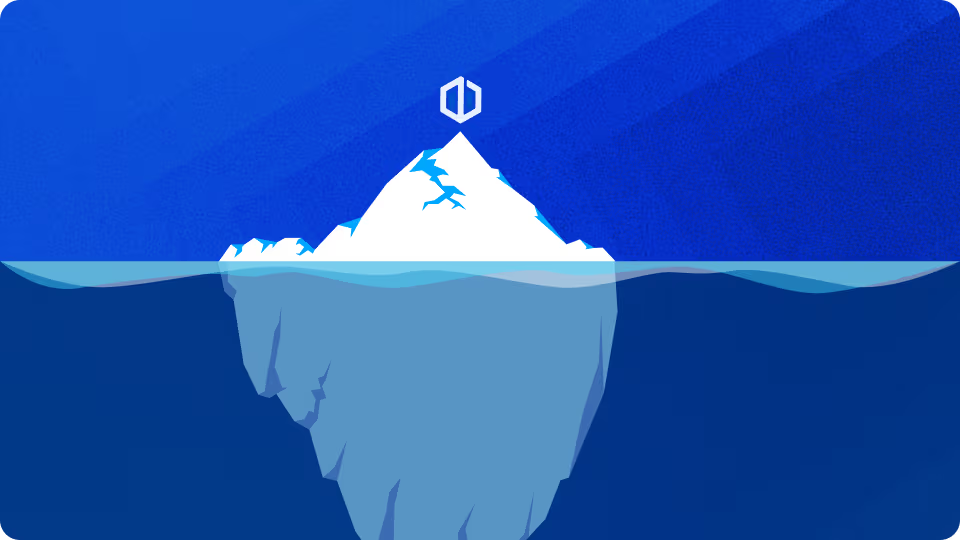
From the outside, everything looks like it's working.
Your team has the tools to produce estimates. Projects get priced and handed off. Nobody is raising alarms. The VP isn't asking questions.
So the natural conclusion is: we don't have a tech problem.
But the thing about systems that feel good enough is that they’re usually hiding something.
What's hidden in most preconstruction stacks isn't a capability gap; it’s one about continuity.
- Cost models don't talk to conceptual estimates.
- Conceptual estimates don't evolve into detailed estimates (they get rebuilt every time)
- VE options from the last project got left behind in that one conference room discussion
- And the assumptions that shaped the budget are gone the moment the project closes
Every phase produces an output. None of them are connected.
The stack isn't broken. It just resets — over and over again. And that reset is costing you more than you think.
The reset nobody talks about
Here's what preconstruction actually looks like at most ENR 400 GCs right now:
- A cost model gets built in one tool — often a spreadsheet
- That model is referenced loosely when the conceptual estimate gets produced
- The conceptual estimate is rebuilt (not evolved) when design progresses
- VE options are documented in a PDF, a slide deck, or a chain of emails
- The detailed estimate starts from scratch with a new template
- Buyout happens, subs come in, and none of that data flows back
At every handoff, the thread breaks. And the next estimator on the next project starts over with nothing but tribal knowledge and a blank spreadsheet.
The problem is that the stack was never designed to connect. It was designed to produce outputs, phase by phase, in isolation.
Recommended reading 👉 We've written about this cycle of lost context in detail. The full piece is here.
Why "good enough" is a competitive liability
When the market was slower and owners were more patient, the “project reset” system was manageable.
But the owners sitting across the table today expect real-time answers.
They want to know:
- What happens if we cut the budget by 10%?
- Can we swap the facade system?
- What does early procurement do to the schedule?
And they want those answers before anyone leaves the room.
The teams that can give it to them instantly are winning more work. The teams that say "we'll get back to you" are losing ground they don't even know they're losing.
The gap between the two is smaller than most people assume. It's not an AI gap or a headcount gap. It's a data continuity gap. Their pricing intelligence is locked inside disconnected tools, and it can't move fast enough to matter.
What a connected cost system actually looks like
Connected cost systems have an entirely different software architecture — one where the thread never breaks.
It starts with cost modeling that flows directly into the conceptual estimate. The assumptions carry forward and are tagged and traceable. When the design develops, the estimate evolves with it in the same file with a full history of what changed and why.
Three things need to be at play for this to work.
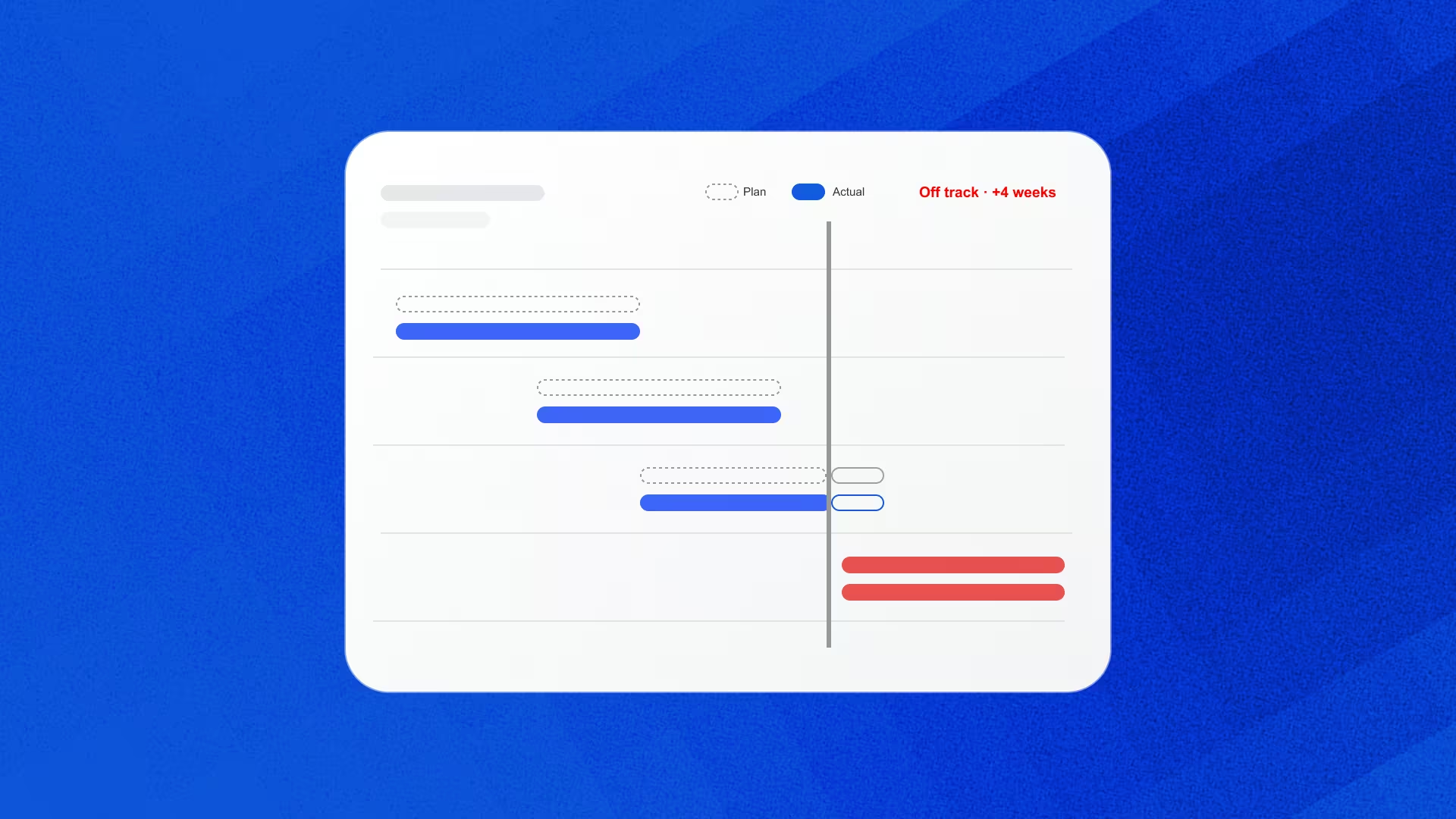
- Scope. If your estimator has to manually reconcile a scope change against a static estimate, the system isn't connected.
- Assumptions. Every estimate is built on dozens of assumptions and inside a connected system, they're embedded within the estimate itself. When an assumption changes, you can see exactly what it costs.
- Options. VE is a live layer in the pricing system — alternatives that are already costed, already compared, ready to surface the moment an owner asks "what if."
The right question to ask your team
Most preconstruction leaders frame the technology conversation as: "Do we need to rethink our stack?"
This is the wrong question.
The better question is: Do our cost systems actually work as one system?
- Does your cost model flow into your conceptual estimate, or does someone rebuild it?
- Do your assumptions survive the handoff from concept to detail, or do they disappear?
- Are your VE options connected to real cost data, or living in a deck somewhere?
- Does subcontractor buyout feed back into your historical pricing, or does that intelligence die at close?
For most teams, the honest answer to most of those questions is no.
This is also why AI investments in preconstruction keep underperforming expectations.
AI needs structured, connected data to reason from. When it doesn’t, AI can only approximate — and approximations dressed up as intelligence are just faster wrong answers.
The data layer has to come first. Learn more about the importance of cost tracking for AI in preconstruction here.
What we're building at Ediphi
At Ediphi, this is the problem we're focused on solving.
Not faster quantity takeoff. Not a better template. The actual foundation: a system where cost models flow into estimates, estimates evolve instead of reset, and every decision — every assumption, every option, every buyout — builds institutional knowledge that compounds over time.
If you're ready to close that gap, we'd love to show you what we've built!

.svg)




.svg)
.svg)