


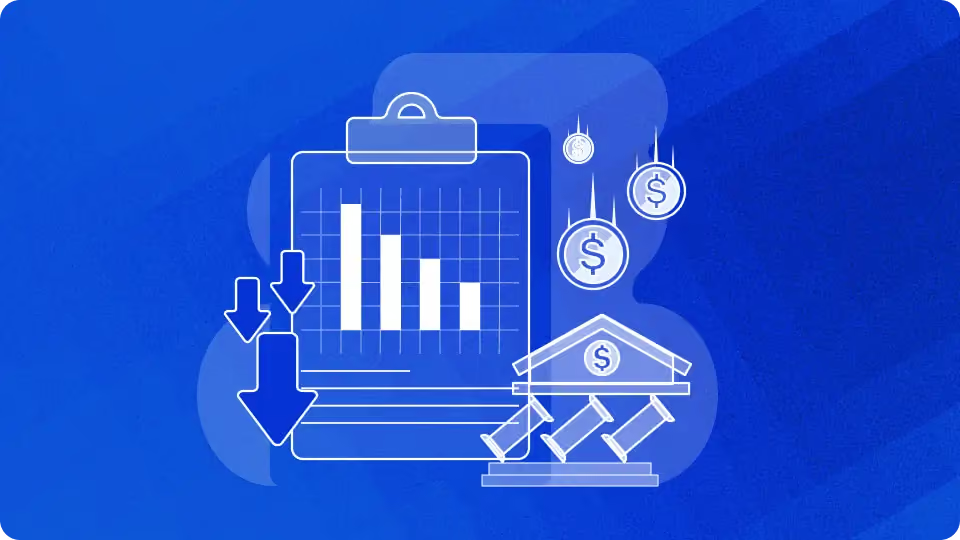
Behind every estimate there’s a story.
You spend months building them. Hundreds of decisions go into each one. Scope gets refined, materials get swapped, the owner changes direction twice, your team adjusts. By the time you hand over a GMP, that story is enormous. And almost none of it survives.
Most projects feel like starting from zero. And that's wild to me, because the reasoning behind a project is often the most valuable part.
So what would it actually look like to build an estimate that remembers it all?
What we mean by a “living record”
Most estimates are snapshots. They show you where you landed, not how you got there.
A living record is different. It’s when your estimates keep every decision, assumption, and adjustment preserved in context, organized by when it happened, why it happened, and what it changed.
Building one requires a few things that traditional estimating tools don't really offer.
Traceability. Every line item needs a persistent identity — something that follows it from concept through GMP, so you can see what it was, what it became, and when it changed.
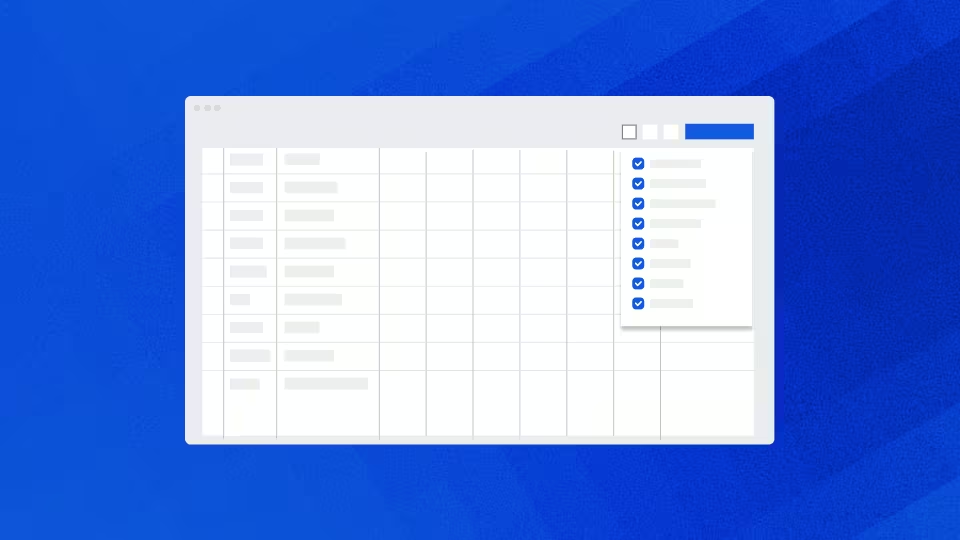
Cost trendlines. Individual decisions don't mean much in isolation. What matters is the trajectory and how a system's cost moved across milestones, and what drove each delta. That movement tells a story that a single number never can.
We’ve built something really special in Ediphi that tells this story. Here’s the breakdown on Cost Trendlines.
Decision context. When a VE option gets accepted or a scope assumption shifts, that event needs to stay connected to the component it affected and not logged separately. It should be attached to the item and visible when you need it.
Only with these in place can an estimate reflect — not just the current number — but the trajectory that produced it.
This changes how you show up to owner meetings
Imagine conversations that feel like this:
Owner: Why did mechanical costs jump between SD and DD?
Estimator: The engineer added a dedicated outdoor air system. Here's the line item, the delta, and what it was before.
Owners: What happened to those VE options from the last design stage?
Estimator: They're here in the estimate with the full decision trail.
Owner: How confident are we in this GMP?
Estimator: Very. The assumptions are documented, the pricing updates are tracked, and every scope change is traceable.
This kind of immediate-ness changes the dynamic completely.
Owners don't just want a number. They want to understand the number. And when your estimate embodies a living record, you can answer their questions right there in the room.
Now you're not just presenting a cost. You're demonstrating command of the project's entire cost history. And that builds the kind of trust that wins repeat work.
The long game is what makes this really special
Now, I’ve been talking to a GC recently who does nothing but multifamily. Big operation out of Atlanta.
Historical pricing keeps coming up in our conversations because they've felt the cost of not having it. Being able to reference and compare five years of completed work, on demand, would change how they price every new opportunity.
They know exactly what it's worth to walk into estimate six with estimate one through five still intact; to have every estimate you run add to the historical cost record.
Every milestone becomes a benchmark for the next cost model. Every VE decision you document teaches the next estimator something they'd otherwise have to learn from scratch. Instead, the system holds it. Everyone, from the junior estimator pulling a conceptual budget to the VP presenting to the owner, works from the same living record.
In Ediphi, your estimate is a narrative that stays intact and that’s just a fundamentally better way to run preconstruction.

.svg)





.svg)
.svg)