


You might have heard it in a demo recently. Maybe in a sales email. Possibly from your own IT department.
"We're integrated with Power BI so reporting is flexible."
Power BI is impressive, to be fair; beautiful dashboards, data connectivity, and if you're already a Microsoft shop, it fits neatly into a story you're already being told.
But there's an important question worth asking:
Power BI is flexible, but for whom?
The flexibility being sold is usually the vendor's, the consultant's, or the data analyst's, but it’s certainly not the estimator’s and it’s probably not yours.
After decades in preconstruction, here’s what I think about the Power BI pitch.
Who actually makes the change?
Preconstruction is unusually demanding when it comes to reporting because the audience never stops changing.
The owner, the contractor, the estimating lead; they all want to see different views of the same underlying number. This is the nature of preconstruction: one set of data, infinite ways to look at it.
Which is why "flexibility" sounds so appealing when a vendor promises it, but the promise quickly breaks down.
When your estimator needs to regroup costs for a new owner requirement, who actually makes that change? When the lender format shifts mid-project, who updates the report? When your preconstruction director needs a view that doesn't exist yet, who builds it?
If the answer involves:
- Modifying a semantic model
- Rebuilding a dashboard
- Calling a consultant
- Or engaging IT
…then the flexibility was never really yours.
It belonged to whoever has the technical access and the time to act on it.
Power BI mistakes business intelligence for reporting
An important distinction needs to be made between business intelligence and reporting.
- Business intelligence is about discovery. You have a large dataset and you need a tool that helps you explore, filter, and surface something you didn't already know.
- Construction reporting is essentially the reverse. You know exactly what the number is and the question then becomes “How does this specific audience need to see it, right now, for this specific purpose?”
Power BI was designed for the first problem.
Every report is built on top of a semantic model that defines how data is structured and how metrics are calculated. Users can slice and filter within what that model exposes, but if an owner needs costs grouped in a way the model doesn't currently support, someone has to go in and rebuild it.
Your estimator should not be that “someone”. They have a bid due Thursday and an owner who needs costs grouped in a way the reports don’t support.
When a vendor positions Power BI as your reporting solution, there's an implicit assumption in the pitch: that you either have (or are willing to hire) the kind of user Power BI was actually built for.
Key requirements for preconstruction reporting tools
A great construction reporting tool gets a few things right.
First, it allows an estimator to close the loop themselves. The reporting layer doesn’t exist apart from the estimating layer.
The second requirement is that the output meets the owner where they are. And where most owners are, still, is Excel.
In this case, owner bid forms, executive summaries, and draw schedules don't require a fully rebuilt dashboard. They’re exported as clean spreadsheets with specific columns, specific groupings, and specific formatting.
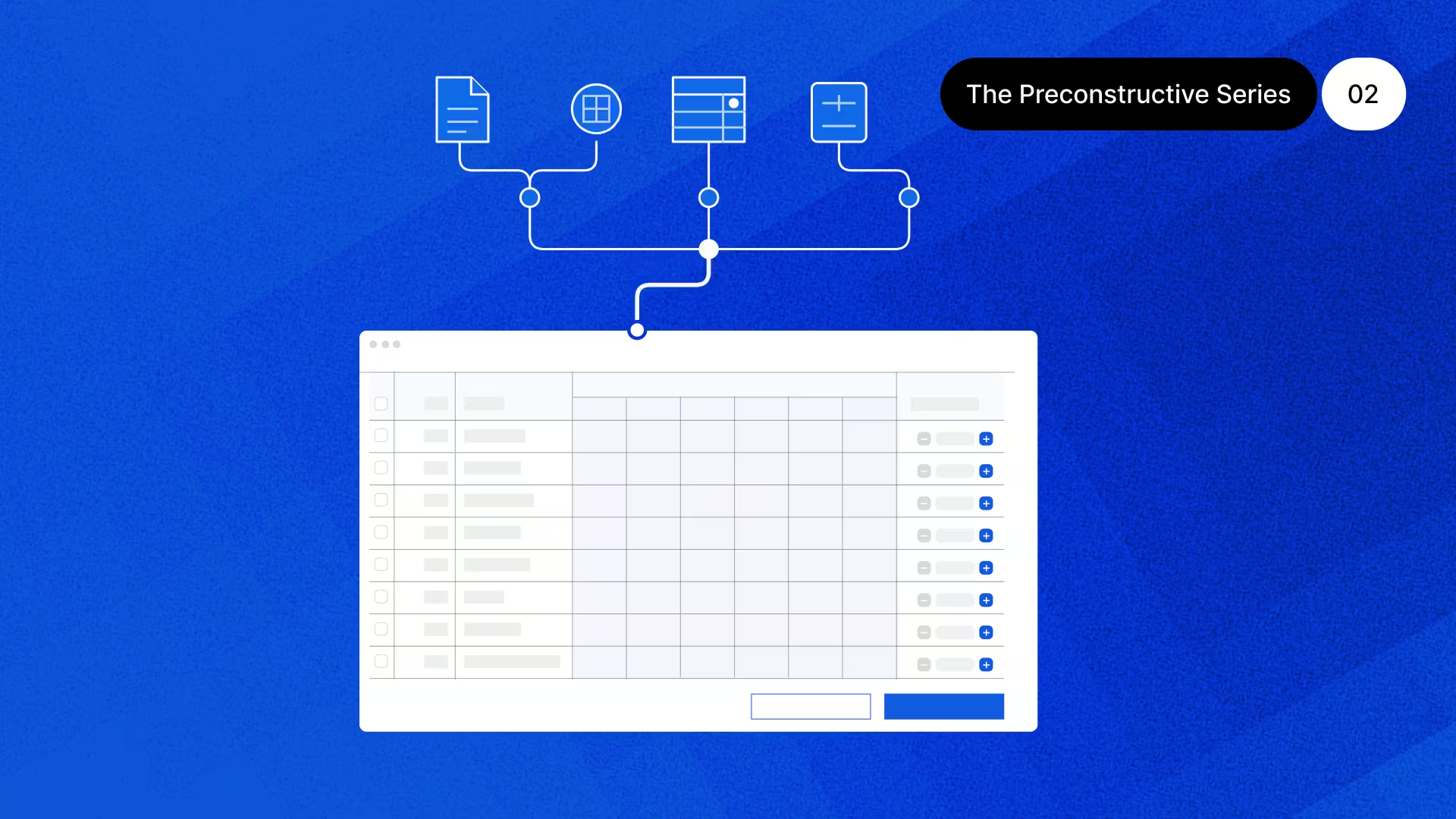
The traditional answer is a manual data transfer to Excel, but a better answer is a live connection with your estimate. This is what Ediphi calls Last Mile. It’s a simple Excel Add-In that maintains a live connection to your Ediphi estimate, automatically populating dashboards as your numbers evolve across the project.
Landry/French, an ENR 400 construction manager went from hours to minutes on report generation after implementing Last Mile — with one estimate producing three different report views and zero rework. See how they did it.
Flexibility should live with the people doing the work
Good reporting in construction doesn't require the most sophisticated technology.
It requires the right people to have control at the right moment and a system where the estimate and the output are connected. This is true whether you're running a traditional GC delivery model or something more collaborative like target value design — the people closest to the work need to own the reporting."
When you're evaluating reporting capabilities in your next software conversation, consider asking a key question:
“How can an estimator create a new owner-facing report without involving IT, a consultant, or a Power BI expert?”
If the answer requires a technical intermediary, the flexibility isn't yours. It never was.
We think we've built the best reporting tool in preconstruction. See if you agree?

.svg)




.svg)
.svg)